
Have you found yourself staring at your running shoes or yoga mat, wondering if picking them up might somehow harm the tiny life growing inside you? I cannot tell you how many times a nervous client has sat across from me in my coaching studio, holding her early ultrasound scan, and asked, “Coach, can I even lift a dumbbell anymore, or should I just stick to walking?”
There is a massive, deeply frustrating misconception floating around India that once you see those two pink lines, you need to head straight for the nearest sofa and stay there for nine months. Honestly, it is completely understandable why you might feel terrified. Your body is undergoing a massive transformation, your hormones are throwing an absolute party, and every relative has a different opinion on what you should and shouldn’t do. But here is the beautiful reality: movement is medicine, especially now. Finding and maintaining a routine of safe exercises during pregnancy isn’t just about fitness; it is about reclaiming control over your body, boosting your mental health, and preparing for the marathon that is labor.
In my ten-plus years of working with pregnant women across various fitness levels, I have seen firsthand how the right movement patterns can transform an anxious, achy pregnancy into an empowering, vibrant experience. Today, we are going to break down an actionable, trimester-by-trimester guide that adapts to your changing body, making it easier than ever to implement safe exercises during pregnancy. Whether you are an avid athlete or someone who has never touched a weight, your movement journey matters. At iFitGuide.in, we believe that staying active during this beautiful phase should feel like a blessing, not a chore. Are you ready to discover how strong your body truly is? Let’s dive in.
Why Exercise During Pregnancy Is Important
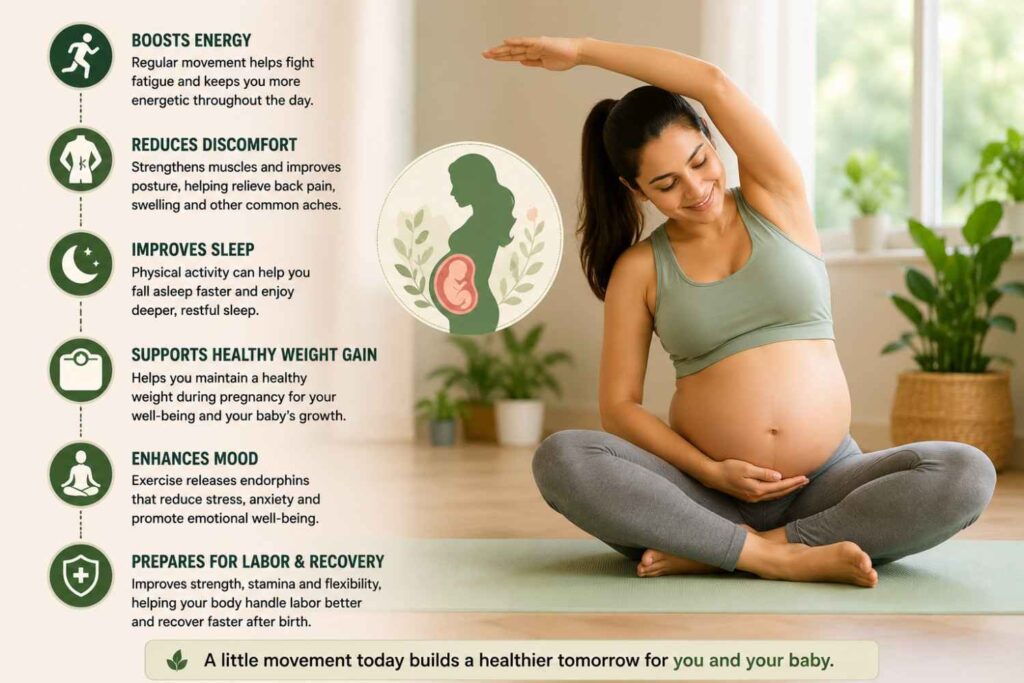
It is completely natural to want to protect your body and your baby by minimizing physical exertion. For generations, traditional advice in Indian households suggested complete rest. However, modern maternal medicine tells a completely different story. Staying active isn’t about hitting personal records or trying to change your body shape; it is about structural preservation, hormonal harmony, and building the physical endurance you will need on delivery day.
When you engage in intentional, structured movement, you are essentially pre-programming your body to handle the immense physical load of late pregnancy. Your core, your pelvic floor, and your cardiovascular system are all working overtime right now. By supporting them through targeted exercise, you are setting yourself up for a smoother gestational period and a significantly faster postpartum recovery. Let’s look closer at how this impacts both you and your little one.
Benefits for Mother
First and foremost, let’s talk about your daily comfort. Have you noticed a nagging ache in your lower back or a strange tightness around your hips? As your uterus expands, your center of gravity shifts forward, forcing your lower back muscles to work double-time to keep you upright. Engaging in regular, safe exercises during pregnancy helps counteract this structural shift by strengthening your glutes, hamstrings, and deep core, providing a natural internal corset that takes the pressure off your aching spine.
In my coaching experience, I have seen dramatic improvements in maternal energy levels and sleep quality within just two weeks of starting a tailored program. When you exercise, your body releases endorphins that combat that overwhelming prenatal fatigue, while simultaneously regulating cortisol levels so you can actually catch some restful sleep at night. Furthermore, consistent movement plays a vital role in healthy weight management and mood regulation. Pregnancy hormones can cause wild emotional swings, but a dedicated workout offers a grounding, meditative space to clear your head and build immense mental resilience. Understanding how these targeted, safe exercises during pregnancy alter your biomechanics is the secret to staying entirely pain-free.
Benefits for Baby
Now, let’s address the most common fear: Does working out put your baby at risk? The short answer is an empathetic, resounding no. Unless you have a specific medical contraindication, sticking to a structured pregnancy workout plan by trimester provides an incredible environment for your baby’s development. When you exercise, your cardiovascular efficiency improves, which directly enhances placental circulation, delivering a rich, consistent supply of oxygen and essential nutrients to your growing little one.
Scientific data consistently highlight that active mothers have a significantly lower incidence of gestational diabetes and preeclampsia. This is because regular muscle contraction improves insulin sensitivity and helps maintain stable blood pressure levels throughout your pregnancy. There is absolutely no evidence suggesting that moderate, controlled maternal exercise causes fetal distress or low birth weight. In fact, you are creating a healthier, more resilient uterine environment that gives your baby a wonderful head start in life.
Safety Guidelines Before Starting Prenatal Exercise
Before you lace up your sneakers and jump into any physical routine, we need to establish some absolute ground rules. This is the non-negotiable coaching talk I give to every single person who walks through my doors. First and foremost, you must secure explicit clearance from your obstetrician. Every pregnancy is entirely unique, and your doctor understands your medical history, placental placement, and specific risk factors better than anyone else. Please do not skip this step.
Once you have the green light, your primary guiding metric shifts from external metrics—like calorie burning or weight lifted—to internal feedback. You must master the art of listening to your body. If you were highly active before pregnancy, you can generally maintain a modified version of your routine. If you were completely sedentary, you need to start slowly, focusing heavily on building a solid prenatal exercise foundation for strength before increasing your workout duration. Take a look at Mayo Clinic’s comprehensive pregnancy exercise guidelines to better understand these foundational safety thresholds.
You must immediately stop exercising and contact your healthcare provider if you experience any of the following red flags:
- Vaginal spotting or fluid leakage
- Sudden dizziness, lightheadedness, or feeling faint
- Chest pain, severe headaches, or sudden calf swelling
- Uterine contractions or pelvic pain that persists after resting
Additionally, your body’s ability to regulate temperature changes dramatically during pregnancy. Overheating, particularly during the critical first trimester, can pose risks to fetal neural tube development. To stay safe, always work out in well-ventilated, cool spaces, wear loose-fitting, breathable cotton clothing, and invest in highly supportive athletic footwear that compensates for loosened joints. Hydration is your absolute best friend right now; keep a water bottle glued to your hand and sip continuously before, during, and after your movement sessions. Keep things highly practical, honor your limitations, and modify every single movement the moment it starts to feel restrictive or uncomfortable.
Pregnancy Workout Plan by Trimester
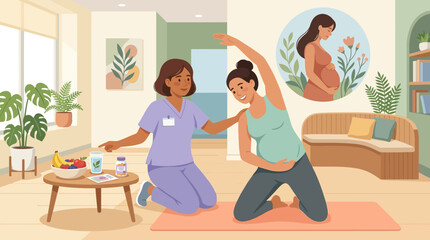
Your pregnancy is a dynamic journey divided into three distinct phases, each presenting unique physiological changes, energy levels, and structural demands. Therefore, your fitness strategy cannot be one-size-fits-all. We must consciously divide your routine into a structured, responsive plan that evolves alongside your growing baby.
If you are looking for more structured guidance on general fitness concepts before customizing them for your pregnancy journey, check out iFitGuide’s comprehensive home workout plans adapted for different fitness levels. Let’s break down exactly how you should move through each trimester safely, effectively, and mindfully.
First TFirst Trimester Workout Plan: Safe Exercises During Pregnancy (Weeks 1–13)
The first trimester is an absolute rollercoaster of unseen, internal changes. Outwardly, you might not look pregnant at all, but inwardly, your body is working at maximum capacity to build the placenta and lay down your baby’s foundational life support systems. This massive hormonal surge often brings intense fatigue, sudden bouts of morning sickness, and unexpected emotional shifts. Your main goal during these initial thirteen weeks is consistency and gentle maintenance, rather than pushing for performance progression.
First Trimester Weekly Schedule
| Day 1 & Day 5 | Day 3 | Day 2, 4, 6, 7 |
|---|---|---|
| Low-Impact Walking (20–30 Mins) | Prenatal Yoga & Gentle Stretching | Rest & Restoration (Hydration Focus) |
When building a sustainable pregnancy workout plan by trimester, the first phase focuses on low-impact, grounding movements. Walking is the absolute gold standard here. It requires zero equipment, keeps your cardiovascular system active, boosts your mood, and can easily be broken down into short, ten-minute increments if you are battling severe nausea. Alongside walking, integrating the best pregnancy yoga for each trimester helps ease early pelvic tension and teaches you how to regulate your nervous system through intentional breathing.
When fatigue limits your capacity, focusing on simple, safe exercises during pregnancy keeps your circulatory habits active without draining your reserves. I distinctly remember working with a client named Priya during her first trimester. She was an incredibly dedicated corporate professional who felt completely defeated by first-trimester exhaustion. She told me she could barely lift her head off the pillow, let alone exercise. I told her to forget about the gym completely. Instead, we agreed on a daily ten-minute evening walk in her neighborhood park, followed by simple, restorative stretching on her living room floor. That tiny shift kept her joints moving, reduced her morning sickness symptoms, and kept her mental health intact without draining her limited energy reserves.
Your ideal schedule right now should involve moving three to four days per week for roughly twenty to thirty minutes per session. If morning sickness hits hard, give yourself permission to skip your workout entirely. Focus on deep diaphragmatic breathing and gentle pelvic floor engagement, which quietly begins preparing your pelvic cradle for the heavier loads to come. Remember, resting when your body demands it is an active, essential part of your training.
Second Trimester Workout Plan: Safe Exercises During Pregnancy (Weeks 14–27)
Welcome to the golden phase of pregnancy! For most women, the second trimester brings a welcome relief from morning sickness and a beautiful return of physical energy. Your baby bump will finally start showing, which is incredibly exciting, but it also means your center of gravity is beginning its slow forward migration. This is your prime window of opportunity to build a resilient structural foundation using safe exercises during pregnancy.
Your hormone levels are circulating high amounts of relaxin right now, a hormone that softens your ligaments to allow your pelvis to expand. While relaxin is amazing for birth preparation, it makes your joints inherently less stable and more prone to injury. Therefore, we want to choose movements that provide external stability while challenging your muscles effectively. Stationary cycling is an exceptional choice during this phase; it delivers a fantastic cardiovascular workout, builds lower-body endurance, and completely eliminates the risk of falling or losing your balance.
Second Trimester Weekly Schedule
| Day 1 & Day 4 | Day 2 & Day 5 | Day 3 & Day 6 |
|---|---|---|
| Strength Work (Squats & Core) | Stationary Cycling or Swimming (30 Mins) | Prenatal Yoga (Balance Focus) |
Swimming is another absolute miracle exercise during the second trimester. The buoyancy of the water completely unloads your joints, relieves pressure on your lower back, and provides safe, full-body resistance. This is also the perfect time to implement structured prenatal exercises for strength, such as bodyweight squats and modified upper-body work. Squats are pure gold for labor preparation because they keep your pelvic outlet mobile and strengthen your glutes and quadriceps, which you will rely heavily on during delivery.
Building prenatal exercises for strength also supports hormonal balance—for more on this, see our guide on how strength training affects your overall health and helps maintain a strength-building foundation across different biological stages. When performing strength work, you must pay close attention to your breathing mechanics. Never hold your breath during a lift; always exhale on the exertion phase of the movement to prevent excessive intra-abdominal pressure, which helps protect your core line from severe diastasis recti.
One of my second-trimester clients, Ananya, felt absolutely phenomenal around week eighteen. She felt like a superhero and wanted to ramp up her pre-pregnancy weightlifting routine. I had to gently pull her back and remind her that her joints were softer than usual. We transitioned her away from heavy barbell work and moved her onto controlled dumbbells, bodyweight squats, and stable cable machines. This kept her feeling strong and athletic while completely protecting her pelvis and spine from unnecessary shear force.
A major structural boundary to implement right now is avoiding any exercises where you lie flat on your back for extended periods. The weight of your growing uterus can compress the vena cava, a major blood vessel, potentially reducing blood flow to your heart and your baby. Always perform your exercises standing, seated, kneeling, or supported by an incline bench. Aim for four to five days of movement per week, keeping your sessions focused on smooth, controlled, stable movement patterns.
Third Trimester Workout Plan: Safe Exercises During Pregnancy (Weeks 28–40)
You have officially entered the home stretch, and your body is carrying a beautiful, significant weight every single day. The third trimester brings a fresh set of physical challenges: your lungs have less room to expand, your feet might begin to swell, your lower back is likely under constant pressure, and sleeping comfortably can feel like a distant memory. Your fitness mantra for these final weeks is incredibly simple: prioritize absolute comfort, mobility, and birth preparation over everything else.
This is the exact time to simplify your pregnancy workout plan by trimester. We are shifting our focus entirely away from building fitness and moving it toward opening up your hips, relaxing your pelvic floor, and calming your central nervous system. Walking remains your foundational movement tool, but you should shorten your stride, slow your pace, and break your walks down into manageable ten-to-fifteen-minute blocks to avoid excessive pelvic pressure.
Third Trimester Weekly Schedule
| Day 1 & Day 5 | Day 3 | Day 2, 4, 6, 7 |
|---|---|---|
| Short, Slow Walks (10–15 Mins) | Cat-Cow & Deep Pelvic Yoga (Mobility Focus) | Deep Rest & Supported Relaxation Poses |
Integrating the best pregnancy yoga for each trimester becomes your absolute superpower during this heavy phase. Poses like Cat-Cow are incredibly effective because taking your body onto all fours immediately suspends your heavy uterus away from your spine, providing instant relief to your lower back muscles while encouraging your baby into an optimal birth position. Deep, intentional breathing exercises should be practiced daily; learning how to consciously relax your pelvic floor on a deep inhale is the exact skill you will use to guide your baby into the world during labor.
Let’s be completely honest here: you are going to have many days where you absolutely do not feel like moving at all. That is completely normal, valid, and expected. I remember a client, Meera, who called me during her thirty-fourth week, crying because she felt too heavy and exhausted to complete her workouts. I sat with her and said, “Meera, your workout today is lying on your side with a pillow between your knees, practicing five minutes of deep belly breathing.” She looked at me with immense relief. That simple breathing work kept her calm, regulated her blood pressure, and prepared her beautifully for a calm, empowered birth experience.
Dial your weekly schedule back to three days of structured, gentle movement, and fill the rest of your week with pure rest and active recovery. If a movement causes any sharp pain, pubic bone discomfort, or pressure in your lower pelvis, drop it immediately. Focus on keeping your mind calm, your joints mobile, and your body completely supported as you prepare for the beautiful arrival of your baby.
Prenatal Exercises for Strength
When people think about prenatal fitness, they almost always visualize gentle walking or soft stretching. While those are fantastic, structural strength is an essential piece of the puzzle that often gets overlooked. You are about to become an athlete who carries a growing child, lifts heavy car seats, and bends down hundreds of times a day. If you don’t build and maintain your physical strength now, your joints will pay a heavy price postpartum.
For guidance on safe, medically approved strength parameters, refer to the American College of Obstetricians and Gynecologists guidelines on safe activity thresholds. Let’s break down five incredibly safe, highly effective strength exercises that you can perform right in the comfort of your home.
Prenatal Strength Matrix
| Exercise | Target Area | Key Pregnancy Benefit |
|---|---|---|
| Wall Push-Ups | Upper Body & Core | Supports Breast Weight |
| Bodyweight Squats | Glutes & Quadriceps | Opens Pelvic Outlet |
| Glute Bridges | Posterior Chain | Relieves Lower Back Pain |
| Bird-Dog | Deep Core & Balance | Improves Spine Posture |
| Pelvic Floor (Kegels) | Deep Pelvic Cradle | Aids Labor & Recovery |
Wall Push-Ups
Traditional floor push-ups place an immense amount of pressure on your expanding abdominal wall, which can worsen core separation. Wall push-ups are an exceptional, pregnancy-safe alternative that allows you to strengthen your chest, shoulders, and triceps without straining your belly.
- How to do it: Stand facing a solid wall, roughly two feet away. Place your palms flat against the wall at shoulder height and slightly wider than shoulder-width apart. Keeping your body in a perfectly straight line from your head to your heels, engage your core and slowly bend your elbows to lower your chest toward the wall. Push firmly through your hands to return to the starting position.
- Modifications: As you move into your third trimester, simply step closer to the wall to reduce the angle and lighten the load on your upper body.
- Common Mistakes: Avoid letting your hips sag forward or your lower back arch excessively. Keep your entire body moving as one unified, solid unit.
Many of my clients are incredibly surprised by how challenging and effective wall push-ups can be when performed with slow, deliberate control. They are fantastic for building the upper-body endurance you will need for holding and nursing your newborn.
Bodyweight Squats
Squats are the ultimate functional movement for pregnancy. They directly target your glutes, quadriceps, and hamstrings, creating a strong structural foundation that supports your changing hips and protects your lower spine from injury.
- How to do it: Stand with your feet slightly wider than shoulder-width apart, with your toes turned out at a comfortable fifteen-to-thirty-degree angle to create plenty of space for your belly. Extend your arms out in front of you for balance. Inhale as you unlock your hips and slowly sit back into an imaginary chair, keeping your chest proud and your heels firmly planted. Exhale as you drive through your heels to return to a standing position.
- Modifications: If your balance feels unstable as your bump grows, place a sturdy dining chair directly behind you and perform “chair taps,” or hold onto a solid doorframe for extra security.
- Form Tip: Only descend as deep as your body comfortably allows without letting your lower back round or your knees cave inward.
Integrating this movement into your routine satisfies your need for practical, safe exercises during pregnancy while keeping your lower body strong, resilient, and ready for labor.
Glute Bridges
As your belly grows larger, your pelvis naturally tilts forward, which completely shuts down your glutes and overworks your lower back muscles. Glute bridges are an incredible way to wake up your posterior chain and provide instant, soothing relief to your lower spine.
- How to do it: Lie flat on your back on a comfortable exercise mat with your knees bent and your feet flat on the floor, hip-width apart. (Note: Only perform this on your back during the first trimester or early second trimester for short periods. Engage your glutes and drive through your heels to lift your hips upward until your body forms a straight line from your shoulders to your knees. Hold for a brief second at the top, then slowly lower your hips back down.
- Modifications: In the late second and third trimesters, elevate your upper back onto a sturdy sofa or a low bench (turning it into a hip thrust) so your upper body remains elevated, completely eliminating any risk of vena cava compression.
This variation is an essential inclusion in your targeted prenatal exercises for strength routine, keeping your glutes firing efficiently without risking your cardiovascular comfort.
Bird-Dog Exercise
The Bird-Dog is an absolute masterpiece of an exercise for pregnant women. It challenges your deep core stabilizers, strengthens your erector spinae muscles, and improves your balance without placing any stressful pressure on your delicate abdominal wall.
- How to do it: Start on your hands and knees in a tabletop position on your mat, with your wrists directly under your shoulders and your knees directly under your hips. Keep your spine neutral and look down at the floor. Inhale to prepare, then as you exhale, slowly extend your right arm straight forward and your left leg straight back behind you. Hold for a brief second, keeping your hips perfectly level, then return to the starting position and switch sides.
- Modifications: If your balance feels shaky, simply focus on extending one limb at a time—just lift your arm, reset, then lift your leg.
Pregnant women constantly tell me that this single exercise helps their posture feel completely realigned after a long day of carrying their baby bump. It keeps you balanced, grounded, and functionally strong.
Pelvic Floor Exercises (Kegels)
Your pelvic floor is a highly specialized hammock of muscles that supports your bladder, uterus, and bowels. During pregnancy, this muscle group carries immense, continuous weight, making it absolutely essential to train them for both endurance and the ability to completely relax.
- How to do it: Sit comfortably on a chair or a fitness ball with your posture upright. Imagine the muscles you would use to stop the flow of urine or prevent passing gas. Slowly contract and lift those deep internal muscles inward and upward. Hold the contraction gently for three to five seconds, then consciously and completely release the muscles for a full five seconds.
- Crucial Insight: The biggest misconception I see is women rushing through hundreds of quick, panicked repetitions. Quality and full relaxation matter infinitely more than quantity.
The Perfect Kegel Template
| Step | Action | Duration/Goal |
|---|---|---|
| Step 1: Engage | Lift internal pelvic floor muscles | Hold gently for 3–5 seconds |
| Step 2: Release | Completely relax the pelvic floor | Release fully for 5 seconds |
| Step 3: Repeat | Focus on deep muscle control | Perform 10 quality repetitions |
Integrating these targeted contractions builds exceptional pelvic resilience, directly serving your collection of prenatal exercises for strength while preparing your body to fully let go and relax during the pushing stage of labor. Prioritizing deep pelvic engagement ensures you are executing truly safe exercises during pregnancy that yield massive real-world returns during labor.
Benefits of Strength Training During Pregnancy
When you consistently prioritize strength work, you are actively preventing the natural muscle loss that occurs during periods of hormonal transition. It gives your shifting body the muscular support it desperately needs to maintain solid posture, reducing the common, daily aches that plague so many pregnancies. Furthermore, women who engage in regular strength work often experience shorter labor durations and a noticeably smoother, faster return to their baseline activities postpartum. I have consistently noticed in my decade of coaching that women who maintain their strength recover their physical autonomy much faster because their muscles possess an established baseline of functional resilience.
Best Pregnancy Yoga for Each Trimester
Yoga is a deeply beautiful practice that offers pregnant women a sanctuary of mental calm, somatic awareness, and deep muscular relief. Many pregnant women find that gentle morning workouts help boost energy—you can adapt iFitGuide’s morning fitness routines for pregnancy by swapping out high-intensity movements for these restorative, stabilizing yoga flows.
Let’s dive into how you can use the best pregnancy yoga for each trimester to nurture your mind and body simultaneously. For further reading on the therapeutic benefits of prenatal movement, explore Healthline’s research on prenatal exercise benefits.
First Trimester Yoga Poses
During your first thirteen weeks, your yoga practice should be entirely focused on grounding your energy, soothing your nervous system, and gently opening up your joints. iFitGuide.in recommends starting yoga early in your pregnancy to build an intuitive, mindful connection with your breath before your body undergoes significant structural shifts.
First Trimester Yoga Sanctuary
| Cat-Cow Pose | Child’s Pose | Butterfly Stretch |
|---|---|---|
| Spine Flexibility | Deep Rest & Calm | Gentle Hip Opening |
- Cat-Cow Pose: Move onto your hands and knees. As you inhale, gently let your belly soften toward the floor as you lift your chest and look slightly upward. As you exhale, gently round your spine toward the ceiling, tucking your chin toward your chest. Hold each position for three to five slow breaths, allowing the movement to gently massage your spine and ease early morning sickness symptoms.
- Child’s Pose: Kneel on your mat, widen your knees to the outer edges of your mat to create plenty of space for your abdomen, and sit your hips back onto your heels. Extend your arms forward and gently rest your forehead onto the mat or a supportive yoga block. Hold this position for one to two minutes, breathing deeply into your back ribs.
- Butterfly Stretch: Sit upright, bring the soles of your feet together, and let your knees open out wide to the sides. Hold your ankles gently and let your hips open naturally without pushing or bouncing your knees. Hold for thirty to sixty seconds while maintaining a tall spine.
If you are feeling intensely nauseous or dizzy on a particular day, avoid moving through fast transitions. Keep your poses close to the floor, hold them for brief, comfortable intervals, and rest completely whenever you need to.
Second Trimester Yoga Poses
As you enter your second trimester, your balance will begin to shift as your baby bump becomes more prominent. Our yoga focus now pivots toward building active pelvic stability, opening up your ribcage to expand your breathing capacity, and boosting your inner confidence. It is a beautiful blend of active support and deep stretching.
- Warrior II: Step your feet wide apart on your mat. Turn your right toes out ninety degrees and keep your left toes facing forward. Inhale as you bring your arms up parallel to the floor, then exhale as you bend your right knee deeply, keeping it aligned over your ankle. Keep your torso upright and gaze smoothly over your right fingertips. Hold for five deep breaths, then switch sides to build incredible lower-body strength and stability.
- Side Stretch: Stand or sit comfortably with an upright spine. Inhale as you lift your right arm high toward the sky, then gently lean over to your left side, feeling a beautiful, spacious stretch along your right ribs. This movement is incredibly helpful for relieving the sharp rib pain that often occurs as your uterus grows upward. Hold for three breaths on each side.
- Bound Angle Pose: Sit firmly on a folded blanket or a bolster to elevate your hips. Bring the soles of your feet together, slide them slightly away from your pelvis to form a loose diamond shape, and gently lean forward from your hips while keeping your spine long. Hold for five to eight breaths to encourage a safe, deep opening through your inner thighs and pelvic floor.
Second Trimester Yoga Matrix
| Warrior II | Side Stretch | Bound Angle Pose |
|---|---|---|
| Pelvic Stability | Intercostal Relief | Inner Thigh Opening |
If you ever feel unstable or off-balance during standing poses like Warrior II, simply slide your back heel against a solid wall or place a sturdy chair nearby for immediate hand support. One of my clients told me that practicing Warrior II with wall support made her feel incredibly powerful, athletic, and entirely in control of her changing body. It is an amazing way to experience the best pregnancy yoga for each trimester while safely building your physical confidence.
Third Trimester Yoga Poses
In the third trimester, your yoga practice becomes an active rehearsal for birth. We want to completely slow down our pacing, hold poses with plenty of supportive props, and direct all of our mental energy toward deep, downward breathing patterns. Many iFitGuide.in clients tell us that learning to command their breath during third-trimester yoga became their absolute superpower during the intense hours of active labor.
- Supported Squat (Malasana): Place a low stool, a stack of sturdy books, or two thick yoga blocks directly underneath your hips. Step your feet wide apart, turn your toes out, and slowly lower your hips onto your supportive props. Bring your palms together at your chest and gently press your elbows against your inner knees, keeping your spine incredibly tall. Hold this pose for five deep, slow breaths, allowing your pelvic floor to fully relax and open.
- Seated Forward Stretch: Sit flat on your mat with your legs spread out in a comfortable, wide V-shape, completely removing any pressure from your belly. Place a thick bolster or a stack of pillows directly in front of you. Inhale to find length in your spine, then gently hinge forward, resting your hands or forearms on your pillows. Hold for one to two minutes to gently release your hamstrings and lower back.
- Deep Breathing Practice (Pranayama): Sit comfortably in a cross-legged position with your back supported by a wall. Place one hand on your chest and one hand directly on your baby bump. Close your eyes and inhale deeply through your nose, feeling your belly expand into your hand. Exhale slowly through your soft, parted lips, visualizing your pelvic floor dropping and completely letting go of tension.
Third Trimester Yoga Matrix
| Supported Squat | Seated Forward Stretch | Deep Pranayama |
|---|---|---|
| Malasana Modification | Spacious Back Relief | Nervous System Calm |
Focus purely on slow, meditative holds that prepare your body and mind for birth. This gentle, trimester-specific approach ensures you are choosing safe exercises during pregnancy that honor your limitations while completely empowering your path forward.
Why Yoga Matters Beyond Physical
Yoga offers a unique mental sanctuary that normal physical exercise simply cannot match. It gives you a dedicated space to process the massive emotional shifts of impending motherhood, reducing maternal anxiety and building a beautiful, intuitive connection with your baby. By practicing yoga regularly, you join a timeless community of women who have used intentional movement to anchor their minds, step out of fear, and step into their innate physical power.
Exercises to Avoid During Pregnancy

While it is incredibly important to talk about what you can do, we must be completely honest and direct about what you need to avoid. This isn’t about making you feel fragile or fearful; it is about establishing smart, protective boundaries for your body and your baby. Your body is navigating unique anatomical changes, and certain movement patterns pose unnecessary risks. For a deeper understanding of evidence-based safety parameters, check out the NCBI scientific research on pregnancy fitness.
First and foremost, completely eliminate all contact sports, such as basketball, football, or martial arts, due to the high risk of direct impact to your abdomen. Next, step away from high-impact jumping routines, intense plyometrics, or sudden twisting movements. Because your ligaments are softened by the hormone relaxin, these sudden movements place extreme stress on your unstable joints and can easily lead to severe pelvic girdle pain. Additionally, avoid any heavy lifting that causes you to strain, hold your breath, or experience a bearing-down sensation in your pelvic floor.
Movements to Redirect
| What to Avoid | What to Do Instead |
|---|---|
| Flat-on-back abdominal crunches | Standing or kneeling core work |
| Heavy overhead barbell presses | Seated controlled dumbbell work |
| High-intensity jumping or plyometrics | Smooth walking or swimming |
| Hot yoga or extreme environments | Well-ventilated, cool studio flow |
You must also completely avoid hot yoga environments or exercising in extreme heat, as keeping your core temperature stable is absolutely critical for fetal safety. Finally, do not perform traditional abdominal crunches or double-leg lifts after your first trimester, as these movements exacerbate core separation. “Knowing exactly what to cut out makes it significantly easier to focus your energy entirely on effective, safe exercises during pregnancy.”
I remember a client who was incredibly frustrated because she loved high-intensity boot camps and hated having to modify her routine. She felt like she was losing her fitness identity. I sat her down and said, “Look, your body is doing the ultimate high-intensity workout twenty-four hours a day by growing a human. Modifying your movement isn’t a sign of weakness; it is a sign of elite athletic intelligence.” Once she shifted her mindset, she embraced low-impact strength work and had an incredibly healthy, active pregnancy. Focus on what your body can achieve today.
Tips for Staying Consistent with Pregnancy Workouts
Staying consistent with a workout routine is challenging under normal circumstances, but when you are navigating prenatal fatigue, shifting schedules, and body changes, it can feel nearly impossible. The secret to consistency during pregnancy is dropping the “all-or-nothing” mentality. A five-minute walk or three simple stretches on your living room floor is a massive victory.
Prenatal Consistency Framework
| Step | Action |
|---|---|
| 1 | Drop the All-or-Nothing Mindset (Even 5 minutes counts!) |
| 2 | Track Energy, Strength, and Mood (Not weight or personal records) |
| 3 | Connect with a Supportive Maternal Community |
| 4 | Give Yourself Permission to Rest on Low-Energy Days |
First, build a realistic routine that fits easily into your current life. Don’t promise yourself you will work out for an hour every day. Instead, commit to twenty minutes of movement, three days a week. Second, adjust your tracking metrics. Stop looking at your weight or your pace; start tracking how much better your lower back feels, how much your energy increases, and how calm your mind feels after you finish moving. Prioritize your recovery by getting high-quality sleep, drinking plenty of water, and nourishing your body with wholesome, nutrient-dense meals.
At iFitGuide.in, we believe everyone—including pregnant women—deserves access to comprehensive, professional resources. You can read through our complete beginner fitness guide, tailored to foundational wellness concepts, to build an even stronger appreciation for lifestyle consistency. The iFitGuide.in community of pregnant women consistently shares how transforming their relationship with movement helped them stay positive during low-energy weeks. Give yourself radical permission to have off days, celebrate your small victories, and remember that every positive choice you make is a beautiful gift to both yourself and your baby.
Your Journey Through Pregnancy
Your path through these nine months is a deeply personal, transformative journey that belongs entirely to you. Maintaining a structured approach to movement is one of the most loving, empowering actions you can take for your physical body and your mental health. By utilizing a customized pregnancy workout plan by trimester that matches your changing needs, you are actively supporting your body through its physical evolution, managing daily discomforts, preparing your mind for labor, and setting a beautiful foundation for your postpartum healing.
Always remember that movement during this sacred phase is about nurturing your body, not draining it. Listen to your physical cues, prioritize your safety, and never hesitate to choose safe exercises during pregnancy that honor your limitations. Integrating the best pregnancy yoga for each trimester will provide the mental clarity and breathing tools you need as delivery day approaches. Before starting or changing your routine, please ensure you have an open conversation and clear approval from your healthcare provider. At iFitGuide.in, we celebrate every pregnant woman who takes ownership of her health, steps onto her mat, and embraces her incredible strength. Trust your instincts, move with love, and enjoy every step of this beautiful journey toward meeting your little one.
FREQUENTLY ASKED QUESTIONS
What are the safest exercises during pregnancy?
The safest and most highly recommended options include low-impact walking, stationary cycling, prenatal swimming, modified strength work, and dedicated prenatal yoga. These movements keep your cardiovascular system active and preserve your joints without exposing you to high-impact stress or balance risks. I always validate my clients’ choices to stick to these foundational movements because they offer incredible structural benefits with minimal risk.
Can I follow a pregnancy workout plan by trimester if I wasn’t active before pregnancy?
Yes, you can absolutely follow a structured routine even if you were completely sedentary before your pregnancy. However, you must start slowly, keep your sessions brief (around ten to fifteen minutes), and prioritize low-intensity walking and gentle mobility work. Be incredibly honest with yourself about your initial fitness level, and slowly build your duration only as your comfort and stamina improve over time.
Are prenatal exercises for strength safe?
Yes, engaging in targeted strength work is exceptionally safe and highly beneficial, provided you maintain proper form, use controlled weights, and have clear medical clearance. Strength training protects your changing posture, prevents muscle loss, and builds the lower-body stamina required for labor. Always remember to breathe continuously throughout every movement to keep your abdominal pressure completely safe.
What is the best pregnancy yoga for each trimester?
The best approach involves selecting highly specific, modified poses that respond directly to your changing anatomy. Use grounding poses like Cat-Cow in the first trimester, stability builders like Warrior II in the second trimester, and supportive openings like Malasana with blocks in the third trimester. Always modify your poses with bolsters and chairs to completely eliminate any risk of falling or joint strain.
How many times per week should I exercise during pregnancy?
Aiming for three to five days per week of moderate, low-impact movement is the ideal sweet spot for most healthy pregnancies. Always prioritize the overall quality and comfort of your sessions over the sheer quantity of days. If you find yourself experiencing intense fatigue, give your body full permission to rest, as recovery is just as vital as movement right now.
What should I do if I get out of breath easily while exercising?
Experiencing shortness of breath is a completely normal response to pregnancy due to progesterone shifts and your expanding uterus. Use the simple “talk test”—you should always be able to carry on a full, comfortable conversation while working out. If you cannot speak easily, simply slow down, lower your intensity, and rest until your breathing fully regulates.
Can I continue my regular fitness routine during pregnancy?
You can typically maintain your pre-pregnancy fitness routine if you were highly active before, but you must implement smart, structural modifications as your pregnancy progresses. For example, a client of mine who loved running transitioned smoothly to power walking and stationary cycling as her bump grew. Always eliminate contact sports, heavy strain, or lying flat on your back after your first trimester.
When should I stop exercising during pregnancy?
You should immediately cease your workout session if you experience any clear warning signs, including vaginal bleeding, fluid leakage, sudden dizziness, chest pain, severe headaches, or regular, painful uterine contractions. Always prioritize the safety of your body and your baby, and consult your doctor immediately before returning to any form of physical exercise. If you are ever unsure about a symptom, the team at iFitGuide.in recommends contacting your healthcare provider right away.